

Is Mobile Windshield Replacement Safe? Florida Guide

Yes — a mobile windshield replacement is just as safe as one done in a shop, as long as a qualified technician uses an OEM-approved urethane adhesive and gives the bond enough time to cure. The bond that holds your windshield in place has to meet the same federal crash standards whether the work happens in a bay or your driveway. The one real caveat is calibration: if your car needs static ADAS calibration, that step can’t be finished in a driveway and has to happen in a properly equipped shop. And Florida’s warm, humid weather actually helps the adhesive cure faster.
A windshield isn’t just a window — it’s a structural safety part. So “is mobile safe?” is a fair question to ask before you let someone glue one to your car in the driveway. Here’s exactly what “done right” means, so you can tell a safe mobile job from a risky one.
That wait is the part most drivers underestimate. We break the first 24 hours down hour by hour in our guide to how long after a windshield replacement you can drive.
Is mobile windshield replacement as safe as in-shop?
It is — because the thing that keeps you safe isn’t the building, it’s the bond. A modern windshield supports the roof in a rollover and gives the passenger airbag a surface to push against when it deploys. The urethane adhesive that bonds the glass to the frame has to be strong enough to pass Federal Motor Vehicle Safety Standard (FMVSS) 212 (windshield retention) and FMVSS 208 (occupant protection). Those standards don’t change based on where the car is parked. A trained mobile tech using the same OEM-grade urethane and the same prep steps produces a bond that meets the same standard as an in-shop install.
Where these jobs go wrong is never the location — it’s shortcuts: skipping primer, reusing old adhesive, rushing the cure, or handing the car back before the urethane is ready. Those mistakes are just as possible inside a shop. In our 25 years working across the Tampa Bay area, the installs that fail aren’t the driveway ones — they’re the rushed ones, in a bay or not. The fix is choosing a technician who does it properly, which is what the checklist below is for.
How does the adhesive stay strong outside a shop?
The bond strength comes from the urethane chemistry, not a controlled room. Most modern windshield adhesives are moisture-curing polyurethanes: they harden by pulling humidity out of the surrounding air. That’s why the shop-versus-driveway debate misses the point — as long as the glass is prepped and set correctly and kept dry while it sets, the chemistry does the same work in either place.
What a good mobile tech controls is the prep and the weather window: a clean, primed pinch-weld, the right bead of fresh adhesive, and a spot that stays dry during the set. In Florida that usually means working under a carport, in a garage, or picking a dry window in the day — not gluing glass in a downpour.
How long before you can drive after a mobile replacement in Florida?
For most modern fast-cure adhesives, the safe drive-away time is roughly 30 to 60 minutes; older conventional urethanes can take 2 to 8 hours or longer. According to I-CAR, the collision-repair training authority, those shortest times are rated at a reference condition of 75°F and 50% relative humidity, and “lower temperature and/or humidity requires a longer time.” The bond keeps gaining strength after that, reaching full cure in about 24 hours.
Here’s the Florida angle most national articles miss: because these adhesives cure with heat and humidity, our climate is close to ideal for a fast, reliable set. A mobile install in a cold, dry northern winter can need a longer wait; a Florida driveway in August generally does not. Always ask your installer for the specific drive-away time of the product they’re using, and don’t drive until it passes — that number is your real safety line, not the fact that the glass is in.
What about ADAS calibration — can that be done in my driveway?
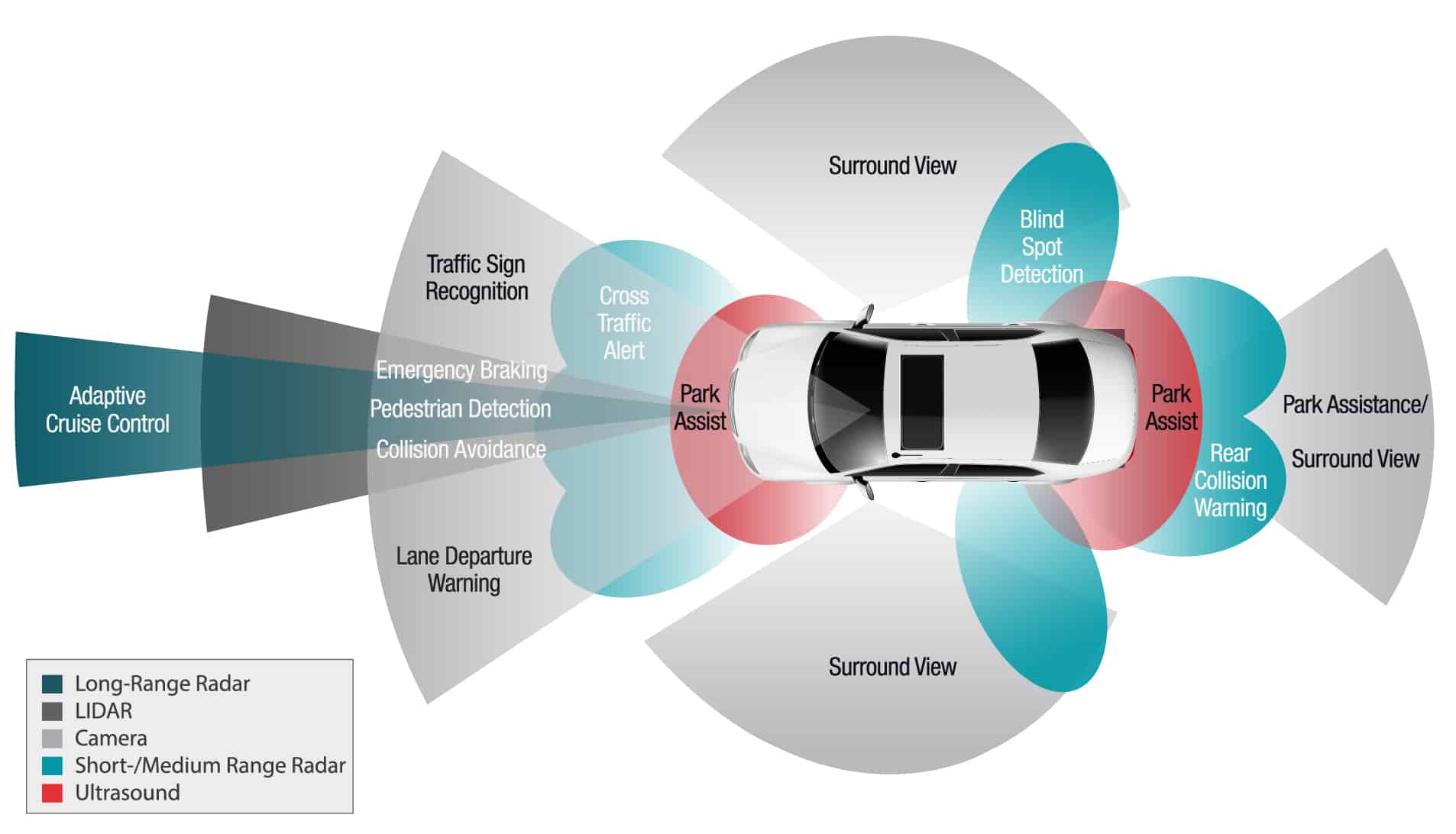
This is the honest catch, and it’s where a lot of mobile providers stay quiet. If your vehicle has a windshield-mounted camera for features like lane-keeping, automatic emergency braking, or adaptive cruise, that camera has to be recalibrated after the glass is replaced. There are two methods, and they aren’t equal for mobile work:
| Dynamic calibration | Static calibration | |
|---|---|---|
| How it’s done | Driving the car at ~35–70 mph on well-marked roads while a scan tool relearns the camera | Vehicle stationary; OEM targets placed at exact distances/angles under controlled lighting |
| Needs a shop bay? | No — can be done as an on-road mobile service | Yes — needs an indoor, level, controlled space; cannot be done in a driveway |
| Mobile-friendly? | Yes | No |
Many vehicles need static calibration, or a combination of both. So a truly safe mobile replacement isn’t “we skip calibration” — it’s a provider who replaces the glass at your location and has a clear plan to complete the required calibration in a proper bay when your car calls for it. If a mobile quote is silent on calibration, that’s your cue to ask. We break this down further in our guide to ADAS calibration after windshield replacement, and you can see our windshield camera calibration service here.
Everything except static ADAS calibration can be done safely at your home or office. A trustworthy provider will tell you up front whether your specific vehicle needs a shop visit to finish calibration — not go quiet about it.
When is in-shop actually the better choice?
Mobile is the right call for most standard replacements, but book the shop when:
- Your vehicle needs static ADAS calibration and there’s no way to complete it on site.
- There’s rust or damage on the pinch-weld that needs treatment before new glass goes in.
- The weather won’t cooperate — steady rain or blowing dust during your window compromises the set.
- You want the car to sit in a controlled space for the full cure before driving.
A good provider will tell you when your specific car and situation are better handled in the bay. Being told “this one should come in” is a sign of a shop that cares about the outcome, not a downgrade.
How do I make sure my mobile replacement is done safely?
Use this quick checklist before you book:
- Certified, experienced technician — ask how long they’ve been doing installs.
- OEM-approved urethane and full prep (primer, fresh adhesive — no reused material).
- A stated safe drive-away time for the exact product, in writing if possible.
- A calibration plan — do they identify whether your car needs dynamic or static ADAS calibration, and how they’ll complete it?
- A dry setting — carport, garage, or a confirmed dry window, not an open lot in the rain.
- Proper glass that matches your vehicle’s features (rain sensor, heating, camera bracket).
If a provider checks those boxes, a mobile windshield replacement in your driveway is every bit as safe as one in a shop — with the bonus that you’re not sitting in a waiting room.
Why do so many Florida windshields need replacing anyway?
Florida drivers deal with more glass damage than almost anyone. Per the National Insurance Crime Bureau, Florida ranked second in the nation for auto glass claims, and claims in the state rose 52% over a five-year period (2020 data). Relentless sun and heat stress the glass, and busy interstates throw up rock chips and debris that turn small chips into spreading cracks fast. That’s also why Florida’s comprehensive coverage often pays for windshield work with no deductible — worth checking before you pay out of pocket.
If a chip is still small, you may not need a full replacement at all — see whether a quick windshield repair can save the glass first.
Key takeaways
- Mobile windshield replacement is as safe as in-shop when a qualified tech uses OEM-approved urethane — the bond meets the same FMVSS 212/208 crash standards either way.
- Your real safety line is the safe drive-away time: ~30–60 min for fast-cure adhesives, longer for conventional ones. Don’t drive until it passes.
- Florida’s heat and humidity help the adhesive cure faster, so drive-away times are often shorter here than up north.
- The one true limit of mobile work is static ADAS calibration, which needs a proper shop bay — a safe provider has a plan for it, not silence.
- Florida sees an outsized share of glass damage, and comprehensive coverage often covers replacement with no deductible.
Frequently asked questions
Is mobile windshield replacement cheaper than going to a shop?
Usually the price is the same as in-shop — reputable providers don’t charge extra to come to you. You save time and travel, not glass quality. In Florida, comprehensive insurance often covers the replacement with no deductible regardless of where it’s done.
Does my car need ADAS calibration after a mobile replacement?
If it has a windshield-mounted camera (lane-keeping, automatic braking, adaptive cruise), yes. Dynamic calibration can be done on the road; static calibration must be completed in a properly equipped bay. Ask your provider which your vehicle needs before you book.
Can they replace my windshield if it’s raining?
Not while it’s actively raining on the work area — moisture on the bonding surface can weaken the set. A good mobile tech will use a covered space like your garage or carport, or reschedule to a dry window.
How long does a mobile windshield replacement take?
The install itself is usually about an hour, plus the safe drive-away time before you can drive (often another 30–60 minutes for fast-cure adhesive). Calibration, if needed, adds time.
Do I have to be there for the appointment?
You need to provide access to the vehicle and a suitable spot, but many people schedule it at home or work and go about their day. Just don’t drive the car until the safe drive-away time has passed.

We replace and repair windshields at your home or office across the Tampa Bay area and Central & South Florida, and handle ADAS recalibration. Questions about your vehicle? Call 813-355-3465.
Cracked or chipped windshield in Florida? We come to you — often with no deductible through your comprehensive coverage.
Schedule mobile windshield service