
Mobile Windshield Replacement in Florida: Is It Safe?
Yes. Mobile windshield replacement is just as safe as having it done in a shop, as long as the technician uses the same approved urethane adhesive, follows the safe drive-away time, and works on a flat, shaded spot. The one real limit is calibration: many newer cars need an ADAS camera recalibrated after the glass is replaced, and some of those calibrations have to be finished in a shop bay rather than in your driveway. Everything else (the install, the bond, the warranty, and your insurance coverage) is identical whether we come to you or you come to us.
You need a windshield replaced, but taking half a day off to sit in a waiting room is its own headache. That’s the whole appeal of mobile service: we come to your house or office and you keep working. The fair question is whether a glass job done in a parking lot is really as good as one done in a shop. For almost every vehicle on Florida roads, the answer is yes, with a couple of weather and technology caveats worth knowing before you book.
How mobile windshield replacement actually works
A mobile replacement is the same job as an in-shop one, done in your driveway instead of a bay. The technician arrives in a stocked van with your specific glass, removes the old windshield, cleans and primes the pinch weld (the metal frame the glass bonds to), lays a fresh bead of urethane adhesive, and sets the new windshield into it. Start to finish, the install itself usually takes about 60 to 90 minutes.
The part that matters most happens after the glass is in: the adhesive has to cure enough to hold the windshield in place before you drive. That waiting period is called the safe drive-away time, and it’s the same whether the work is mobile or in-shop: roughly an hour with the fast-cure urethanes most professionals use, under normal conditions (Safelite, Safe Drive-Away Time). We’ll give you the exact number for your car and the day’s weather. If you want the full breakdown, we cover it in how long after a windshield replacement you can drive.
Those published times assume moderate conditions. I-CAR, the collision-repair training organization, rates the shortest fast-cure times at about 75°F and 50% relative humidity and notes that cooler or drier air means a longer wait. The bond keeps gaining strength after you drive off and reaches full cure in about 24 hours, so skip the car wash and the slammed doors for the rest of that first day.
Is it as safe as an in-shop replacement?
It is, because the thing that makes a replacement safe isn’t the building. It’s the adhesive bond and the technician following the standard. Your windshield is a structural part of the car, not just a window. The Auto Glass Safety Council, the industry’s standards body, notes that your windshield and side glass are part of the vehicle’s passenger-restraint system, and that the glass has to be installed properly for the airbags to deploy safely and to help keep occupants inside the car in a crash, which is why its member shops follow a published auto glass replacement safety standard (AGSC).
The adhesive bond has to satisfy two federal crash standards: FMVSS 212, which covers windshield retention, and FMVSS 208, which covers occupant protection. Neither one cares where the car was parked during the install. Same urethane, same prep, same cure time, same result.
A mobile technician uses the same OEM-quality glass, the same approved urethane, and the same drive-away rules as a shop. What a good mobile tech watches for is the one thing a shop controls automatically: a clean, dry, stable surface to bond to. On a flat driveway out of active rain, that’s easily handled. The failure mode to avoid is a rushed install on wet glass or a windshield still coated in old adhesive, and that’s a technician problem, not a mobile-versus-shop problem.
Mobile vs. in-shop: a side-by-side
For most Florida drivers the two are interchangeable. The practical differences come down to convenience and, for a minority of vehicles, calibration.
| Factor | Mobile (at your home or office) | In-shop |
|---|---|---|
| Chip repairs & standard replacements | Yes | Yes |
| Glass quality & adhesive | Same OEM-quality glass, same urethane | Same |
| Safe drive-away time | Same (about 1 hour, fast-cure) | Same |
| Convenience | Tech comes to you; no waiting room | You drive to the shop and wait |
| Controlled temperature & dust | Weather-dependent; tech works around it | Climate-controlled bay |
| Dynamic ADAS calibration | Usually fine (done on a road drive after install) | Yes |
| Static ADAS calibration | Often needs the shop (targets + level floor) | Yes |
| Insurance & cost | Same coverage; typically no extra trip fee | Same |
What Florida weather means for a mobile install
Florida’s climate changes the logistics of a mobile job more than the quality of it. Two things matter: heat and water.
Heat is mostly about working conditions. A windshield that’s been baking in a parking lot can be too hot to prime and bond cleanly, so a good tech works in shade — your carport, a garage, or the shaded side of a building, and lets the glass come down to a workable temperature. That’s the main reason we ask for a covered or shaded spot when you book.
Water is the surprising one. Most windshield urethane is moisture-cure, which means humidity actually helps it set, and Florida’s warm, humid air often speeds the cure rather than slowing it. What you can’t have is standing water or rain hitting the bonding surfaces during the install, because that contaminates the bond. So our rule is simple: we won’t lay adhesive in active rain on the glass, but a humid day or a passing shower after the windshield is sealed and you’re past drive-away time is not a problem. If one of our summer downpours rolls in mid-install, we pause or reschedule rather than risk the bond.
When you still need the shop: ADAS calibration
This is the one honest limit of mobile service. If your car was built in roughly the last several years, it probably has a camera mounted behind the windshield that runs driver-assistance features like lane-keeping, automatic emergency braking, and adaptive cruise. When the glass comes out, that camera’s aim changes, and the system has to be recalibrated so those features read the road correctly. On ADAS-equipped vehicles, recalibration after a windshield replacement isn’t optional.
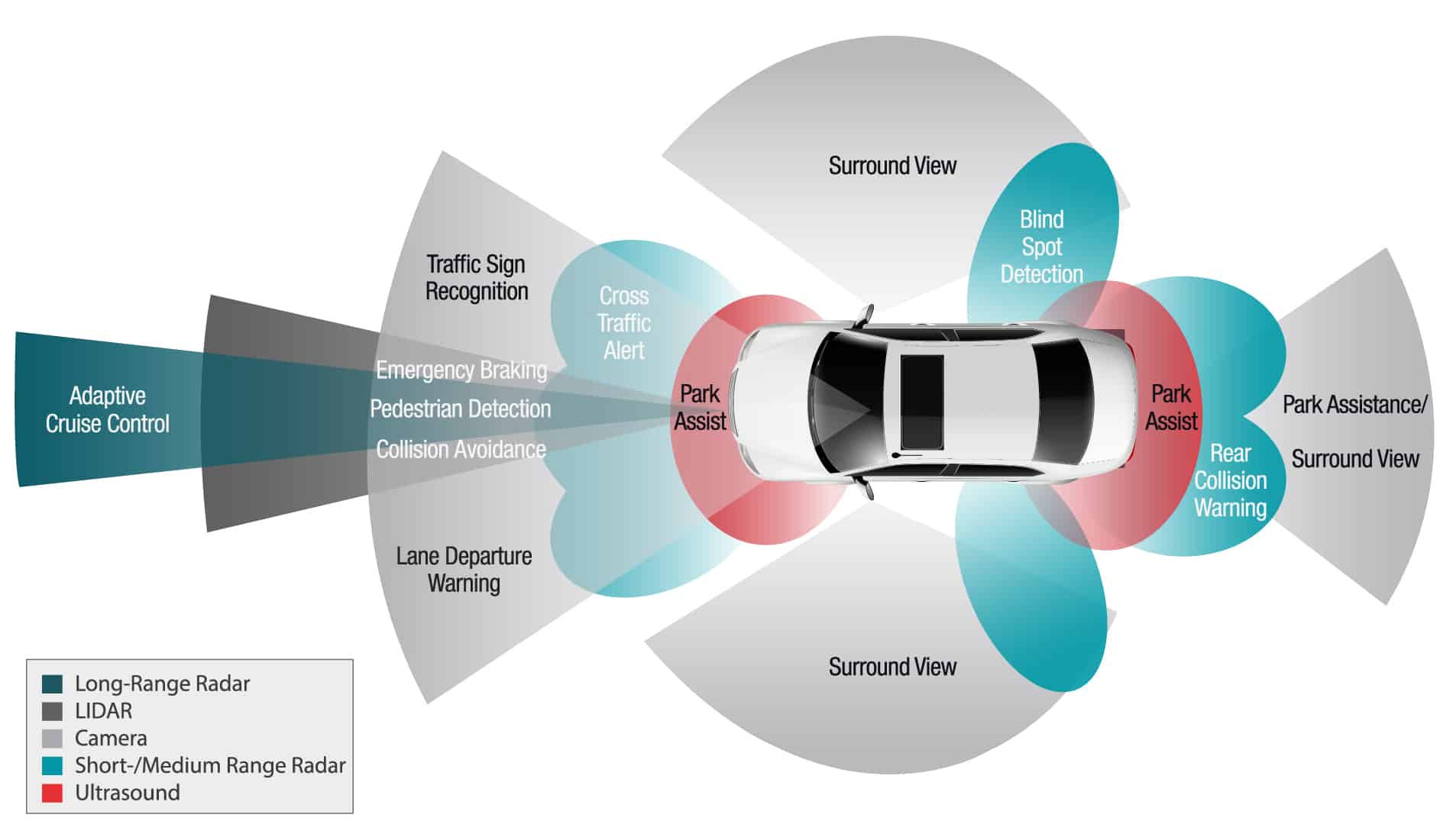
There are two ways to do it, and that’s where location comes in. Dynamic calibration is done by driving the car at a steady 35–70 mph on a road with clear lane markings while the system re-learns, which is perfectly doable after a mobile install. Static calibration is done with the car parked, using manufacturer target boards set at exact distances in a controlled space with a level floor and even lighting (Car ADAS, Static vs. Dynamic). A driveway usually can’t meet those requirements, so vehicles that need static calibration are the ones we finish in the shop. Many cars accept dynamic calibration; some require static; some need both. It depends on the make and the manufacturer’s procedure. We explain the two types in more detail in our guide to static vs. dynamic ADAS calibration. Tell us your year, make, and model when you book and we’ll know up front whether your car can be fully handled at your door or needs a shop visit for calibration.
Other times we’ll suggest the shop
Calibration isn’t the only reason. Mobile handles most standard replacements, but we’ll book the shop when:
- The pinch weld has rust or damage that needs treatment before new glass goes in.
- Steady rain or blowing dust would hit the bonding surface during your appointment window.
- You’d rather the car sit indoors for the whole cure before you drive it.
Hearing “this one should come in” isn’t a downgrade. It means the installer looked at your car and not just the calendar.
What to have ready for a mobile appointment
A mobile install goes faster and comes out better when the spot is ready. Here’s the short list we give customers:
- A flat, shaded spot — a driveway, carport, or covered area with room to open both front doors fully.
- A clear path to the car and, ideally, access to a standard power outlet (handy for calibration or a vacuum — ask when you book).
- A tidy dashboard and front seats. We cover and protect them, but less clutter means a cleaner, quicker job.
- About an hour of lead time before you need to drive, for the safe drive-away window.
- Your year, make, and model when scheduling — especially if there’s a camera behind the glass — so we plan any calibration ahead of time.
If a mobile spot won’t work — apartment parking, no shade, or a car that needs static calibration — it’s an easy switch to a shop appointment. We serve drivers across Florida’s Suncoast, and you can start either way with a windshield replacement quote.
How to check any mobile installer before you book
Whoever you call, these six answers tell you more than the price does:
- How long the technician has been doing installs, and whether they’re certified.
- Whether they use OEM-approved urethane with fresh primer and adhesive, nothing reused.
- The drive-away time for the exact product they’ll use, in writing if you can get it.
- Whether your car needs dynamic or static calibration, and how they’ll complete it.
- Where the work happens if it rains: a garage, a carport, or a rescheduled dry window.
- That the glass matches your car’s features: rain sensor, heating elements, camera bracket.
Florida gives installers plenty of practice. The National Insurance Crime Bureau ranked Florida second in the country for auto glass claims, with claims up 52% over five years (2020 data). Sun, heat and interstate debris turn small chips into running cracks quickly, so if yours is still a chip, check whether windshield repair can save the glass before you book a replacement.
Key takeaways
- Same safety, different location. Mobile uses the same glass, adhesive, and safe drive-away time as a shop — the bond is what matters, not the building.
- Plan for about an hour of drive-away time after a roughly 60–90 minute install before you get back on the road.
- Florida humidity helps the moisture-cure adhesive; the real enemies are direct water on the bond and a scorching, sun-baked windshield, so we work in shade.
- ADAS is the one caveat. Dynamic calibration works after a mobile install; static calibration usually needs the shop. Give us your make and model so we plan it.
- Cost and coverage don’t change. In Florida, comprehensive insurance covers windshield work with no deductible, mobile or in-shop.
- Vet the installer, not the location. Ask about certification, the adhesive, a written drive-away time, and their calibration plan.
Frequently asked questions
Is mobile windshield replacement safe?
Yes. A mobile technician uses the same OEM-quality glass, the same approved urethane adhesive, and the same safe drive-away standard as a shop. The safety of a replacement comes from the adhesive bond and the technician following the procedure, not from the building it’s done in.
Can you replace a windshield in a driveway or parking lot?
Yes, as long as there’s a flat, shaded spot with room to open the front doors and the glass isn’t being rained on during the install. Shade matters in Florida because a sun-baked windshield can be too hot to bond cleanly, so a carport or the shaded side of a building is ideal.
How long does it take, and when can I drive afterward?
The install itself is usually 60 to 90 minutes, and you can typically drive about an hour later once the adhesive reaches its safe drive-away time. Your technician gives you the exact time based on the adhesive and the day’s conditions — here’s more on drive-away time after a replacement.
Does rain ruin a mobile windshield replacement?
Not by itself. Windshield urethane is moisture-cure, so humidity and even light rain after the glass is sealed can actually help it cure. What we avoid is water hitting the bonding surfaces during the install, so we won’t lay adhesive in active rain — if a storm rolls in mid-job, we pause or reschedule.
Can ADAS calibration be done at my house?
Sometimes. Dynamic calibration, which is done by driving the car on a marked road after the install, can be completed as part of a mobile visit. Static calibration needs manufacturer targets and a level, evenly lit space, so those vehicles are finished in the shop. Tell us your make and model and we’ll know which one your car needs.
Is mobile windshield replacement more expensive?
Usually not. The glass, adhesive, and labor are the same, and most Florida shops don’t add a trip fee for mobile service in their area. If calibration is required, that’s a separate line item whether the work is mobile or in-shop.
Does insurance cover mobile the same as in-shop?
Yes. Your coverage doesn’t change based on where the work is done. In Florida, comprehensive policies cover windshield replacement with no deductible, so mobile service is often $0 out of pocket. See whether a windshield claim raises your insurance.
Do I have to be home for the appointment?
No. You need to give us access to the car and a workable spot, and many customers book at home or at work and carry on with their day. Just don’t drive the car until the safe drive-away time has passed.
Want us to come to you?
Tell us your year, make, and model and we’ll confirm whether it’s a full mobile job or needs the shop for calibration. With comprehensive coverage in Florida, it’s usually $0 out of pocket.
Request a free quoteSchedule service